Designing Your Home Office for Productivity and Peace
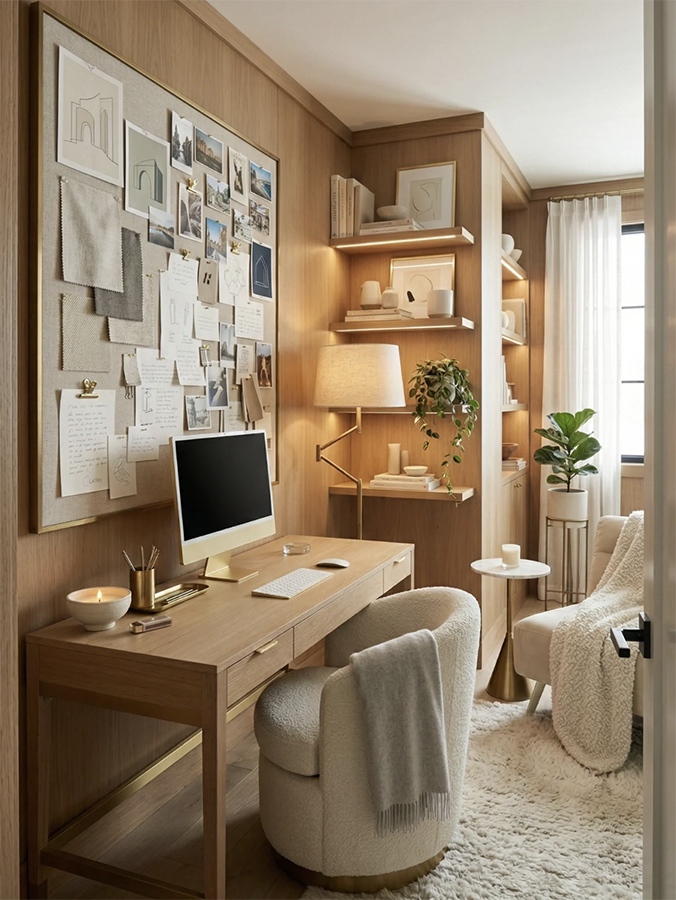
Just ten years ago most of us had an office that we commuted to daily, returning home at the end of each day. Fast forward to Covid and everything we knew about work changed. Suddenly office towers were closed and we all scrambled to create a makeshift office within our homes. And while many of us have been ordered back to the office there’s still a large portion of the population that only has to walk across the hall to be at work.
It’s easy to buy a desk and chair and throw it in a corner and call it an office but for maximum productivity we usually require something additional. Each of us will have our own considerations and requirements but there are some essential tips that apply to any home office.
Design a Home Office for Productivity and Peace - The Essentials
Step 1 - Start With the Basics - Desk & Chair
1/ The Desk
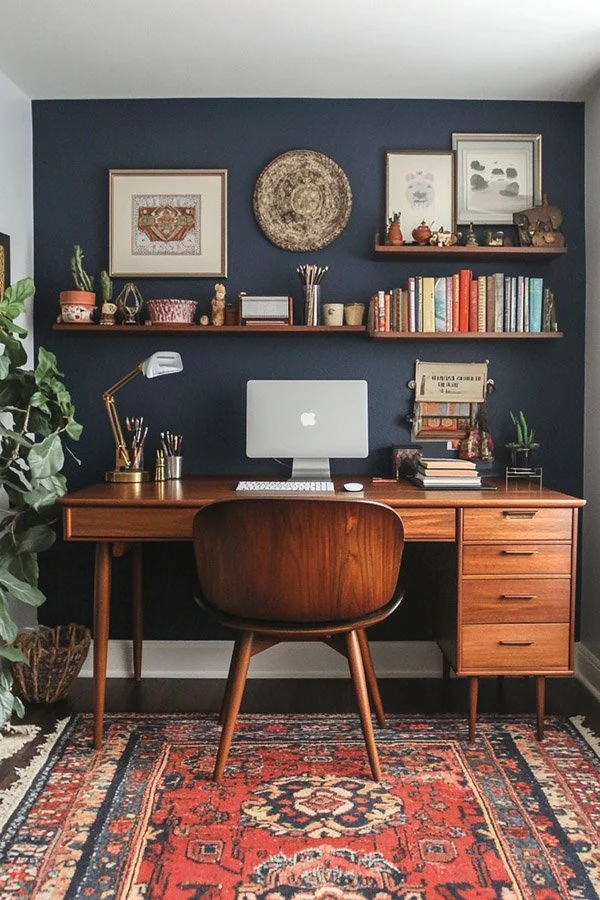
This is one of the most important elements when building an office. And while it seems like an easy decision to make there are actually a few important things to consider. First and foremost, start by considering what type of desk you’re in the market for. Here are some of the options available:
Shared Desk - Perfect for those who share a home office.
Standing Desk - The best option for ergonomic comfort.
Standard Desk - The style we’re most accustomed to working with.
Small Space Desk - Perfect for condos or small homes.
Most desks are a standard height of between 28 and 30 inches but you’ll want to also consider depth and width. How many books, binders, notes will you be referring to throughout your day? If you need extra space, consider that before you shop. Likewise, if you need a more narrow depth due to size constraints, know that before you shop.
2/ The Chair
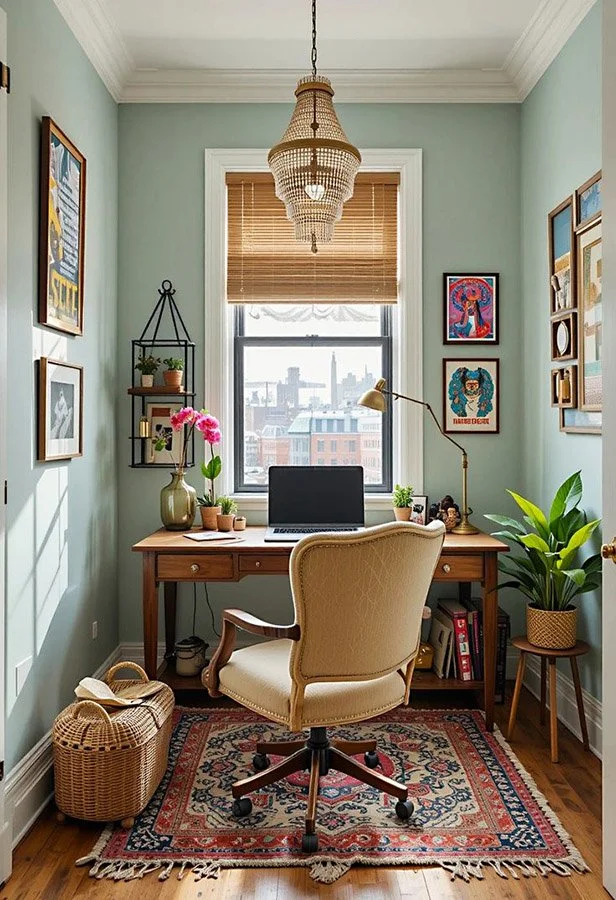
It’s not uncommon to find a dining chair being used as a desk chair. Yes, it works but at what cost? If you’re spending any amount of extended time at your desk you may find the dining chair is causing significant issues (back and neck). Here are some of the most popular chair styles to consider if you’re in the market for a new one:
Rolling Chair - Perfect for larger spaces to move about more freely.
Ergonomic Chair - These are the most ideal option for comfort but they’re pricey.
Standing Desk Chair - Allows for a sit/stand position for back relief.
Household Chair - Not ideal but useful in a pinch.
Consider how you spend your day and the type of chair that would allow you to be the most productive. If you’re spending more than 4-5 hours per day in a chair you should definitely be considering an ergonomic chair that will support your spine and leave you feeling good throughout the day.
Step 2 - Storage Solutions
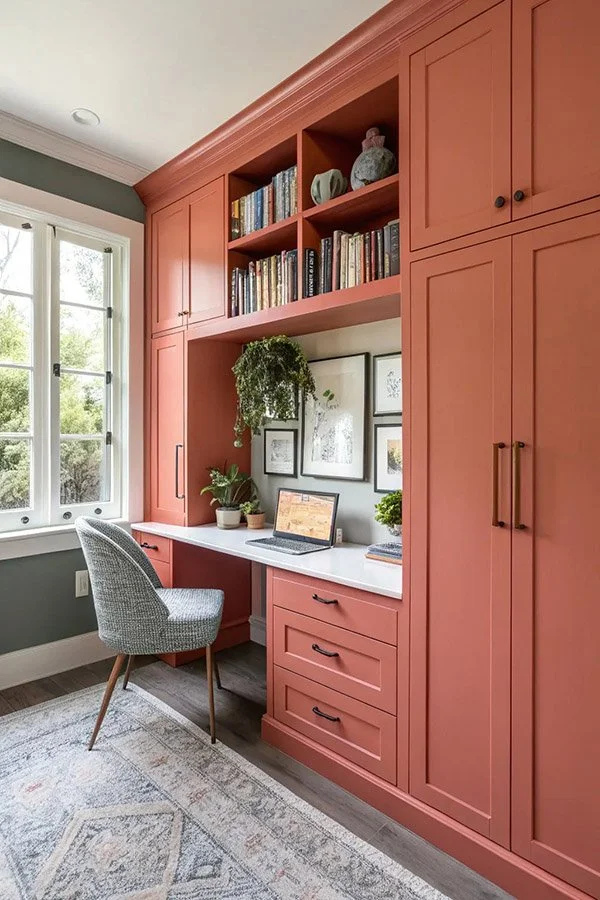
One of the main causes of overstimulation comes from being surrounded by clutter. As the old adage goes, a clean desk equals a clean mind. It’s easier to feel relaxed and peaceful when our office is clean and clutter free.
Here are the most useful storage options for your office:
Closed Storage - Perfect for messes that need to be hidden away.
Bookcase/Open Storage - This can add visual interest to a space.
Filing Cabinet - Ideal for those who still use a lot of paper at work
Even if your home office is closed off from the rest of your home, it’s a good practice to tidy your desk everyday when leaving the office. The psychological benefits of a clean office space are well documented. It’s the best way to give yourself a head start each new day. So be sure you have at least a little bit of adequate storage systems in your home office.
Storage is integral to feeling peaceful at work. So often when we are short on storage we have a cluttered mess that can leave us feeling drained and overwhelmed every day. Focus on getting the clutter organized and your days will feel more peaceful and productive.
Some space planning may be required when installing home storage solutions. If you need help understanding space planning and the benefits of this, read this post.
Step 3 - Organizing Solutions
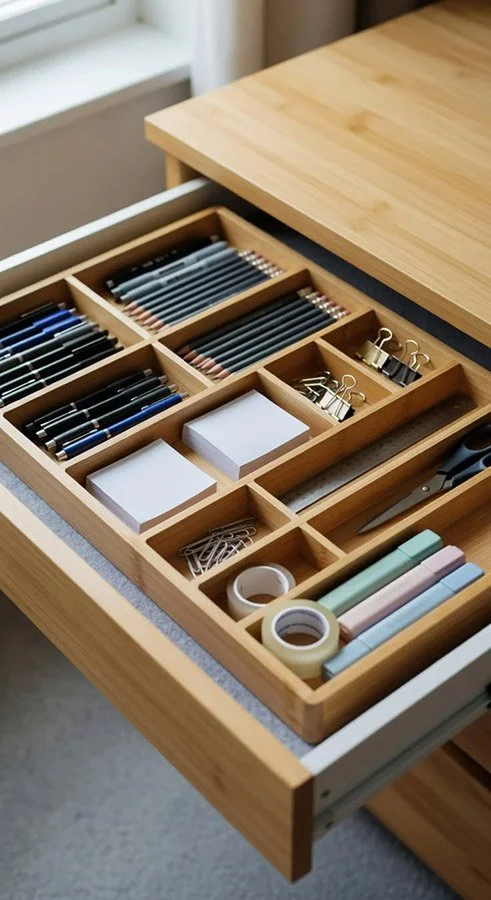
Sometimes it’s the little things that have the biggest impact on us. In the case of a home office, it can be the solutions that offer maximum organization that leave us feeling the most peaceful. Here are some of my favourite home office organization tools:
Drawer Organizers - Never lose anything again = peace.
Cord Organizers - A simple tool to combat the rats nest of cords on your desk.
Desktop Organizer - Organize your work so that you know what needs to be accomplished throughout your day.
Magazine Files - Hide away your mess and organize manuals, instructions, etc.
Baskets and Bins - Perfect for storing extra office supplies.
Rolling Cart - Small space solution for a portable office.
Some or all of these solutions will leave your space more organized and feeling at peace in your home office. Just as I described above in the benefits of a clean desk, the same can be said for your office drawers as well. Opening a drawer to easily find what you need leaves you feeling clear headed and able to tackle the real problems of your day.
Step 4 - The Lighting
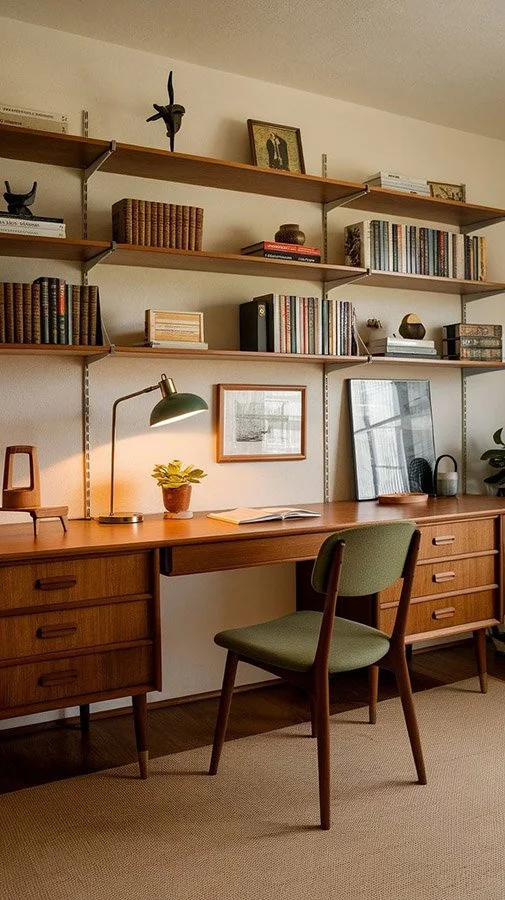
There are few things that matter more than lighting when designing a home office. Poor lighting can cause us to strain our eyes which can lead to tension headaches throughout the day.
When deciding on lighting, we need to account for changing seasons, time of day we work, amount of natural light and how much artificial lighting we have in our space. We should never feel like we’re straining to read or that we’re becoming fatigued throughout the day due to low light conditions.
There are three types of lighting that every room should have:
Ambient Lighting - Also known as general lighting, this is your main lighting source, most often the overhead and recessed lighting. It can also include natural light.
Task Lighting - Meant for specific tasks. Usually a lamp or floor lamp.
Accent Lighting - Helpful for highlighting art or an architectural feature.
While I always advise clients to utilize all three of these types of lighting in all their space, I don’t think all three are necessary for a home office. You definitely want ambient lighting to give you the brightness you need for an effective workplace. And a task light in the form of a desk lamp is super effective at brightening up just the area you’re working in. It’s not necessary to have accent lighting unless you have some artwork or an architectural feature that would stand out and make your office feel better for you. Want some tips on buying light fixtures? Read this post.
Step 5 - The Extras
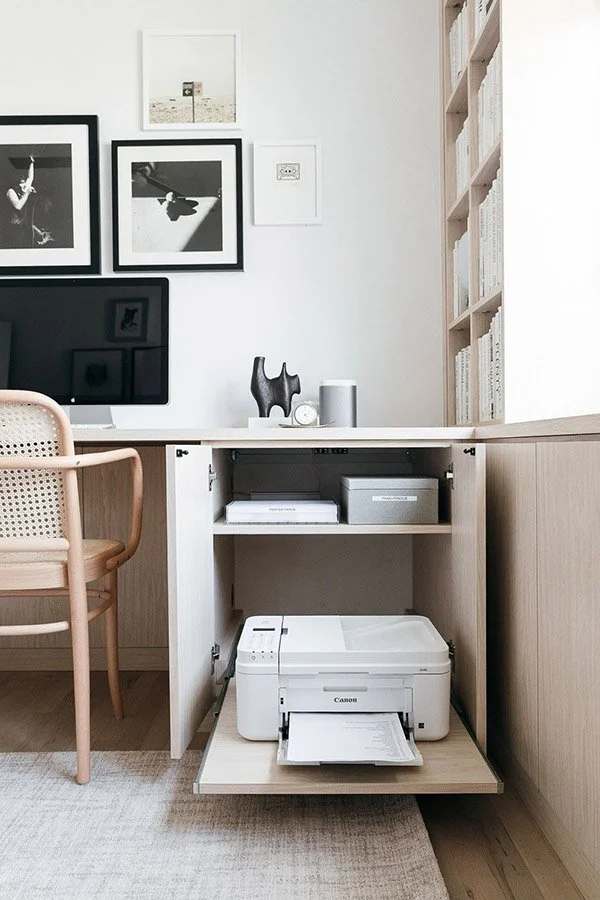
Each of us have such different priorities when it comes to a home office. Aside from the place you work you’ll want to consider what makes your day easier. There are some needs we can outsource but when you’re planning the design of your office, evaluate what you need and what can be outsourced including:
Printer - Do you have a local print shop close by or is this a necessity for you?
Shredder - If you work with confidential information you may need this.
Bulletin Board - These are great if you need to have an eye on important documents.
Calendar - Great for those who plan a lot of meetings and need an eye on the date.
Wall Clock - If you spend a lot of the day on calls you may need a visual reminder of the time.
Creating a peaceful home office environment takes some planning but if you do your research and find the products that best suit your needs you’ll have a space that functions effectively for many years to come.
If you need help designing a home office or any other space in your home, reach out to me. I’d love to discuss your upcoming project.
Warm regards,
Adrienne